
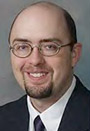
 Greg Edens
In the wake of the Hurricane Katrina disaster, relief agencies were overwhelmed by the need of the people along the Gulf Coast. In addition to the usual work performed by South Carolina Baptist disaster relief volunteers, a new avenue to minister is developing: medical teams.
One of the first medical response teams through South Carolina disaster relief was deployed to the Mississippi Gulf Coast three weeks after Hurricane Katrina. The team worked alongside doctors and nurses from Mississippi at the First Baptist Church of Pascagoula. The medical clinic was set up at a feeding unit staffed by Georgia disaster relief volunteers, where up to 15,000 meals were prepared each day. Since many in the community were coming there for meals, the word spread that medical help was also available.
The team treated not only victims of the disaster, but relief workers as well. One of the medical team members, Eddie Talley, is a paramedic and a licensed professional counselor. He was able to counsel hundreds of people recovering from the shock of the devastation by walking beside cars as they drove through a donation site to pick up bottled water, ice and other donated items.
The team nurse, B.J. Petit, provided first aid to victims and relief workers by administering hundreds of tetanus vaccines, something that was necessary due to the hazards that go along with cleanup after a hurricane.
Many patients came because their usual sources of medical care had been cut off. Imagine waking up and your doctor’s office, pharmacy and, in some areas, hospital are gone. What would you do without medicine for your high blood pressure, heart problems or diabetes?
Such was the scenario played out across the Gulf Coast region, which prompted medical relief workers to think about doing disaster relief in a coordinated and organized way. A grassroots effort has started to mobilize nurses, paramedics and doctors to get involved in disaster relief with our own state convention.
Medical professionals have a desire not only to use their talents treating people for their physical needs, but for addressing spiritual needs as well. South Carolina Baptist disaster relief has agreed, in future disasters, to provide the command structure and support to deploy a medical unit, just as it does for other units such as feeding, chain saw, recovery, etc.
Future plans include disaster relief training geared specifically toward medical personnel to prepare them for what to anticipate when responding to a disaster. Also, South Carolina disaster relief is organizing a database of medical professionals for mobilization in the event of a disaster.
Not every disaster is on the scale of Hurricane Katrina, so in some cases a medical unit might not be needed at all. On the other hand, when a disaster strikes, and medical teams are needed, South Carolina disaster relief plans to be ready to help.
Disaster relief is a great example of what Jesus was referring to in Matthew 25:35-36: “For I was hungry and you gave me something to eat, I was thirsty and you gave me something to drink, I was a stranger and you invited me in, I needed clothes and you clothed me, I was sick and you looked after me.”
If you are a medical professional and want to help during a disaster, contact Randy Shell at (843) 413-1919 or Eddie Petit at (864) 878-4123.
Edens serves part-time as director of the Global Missions Impact Center at East Pickens Baptist Church. A full-time family physician in Easley, he is a graduate of Furman University and the Medical University of South Carolina. He and his wife Drea have a son, Joshua.