
The sun is waning when Donnie Sisk makes it to a campsite deep in the Shoal Creek Ranger District of the Talladega National Forest. He spots a place to sit down, and at the same time, a young boy spots him, eyes wide.
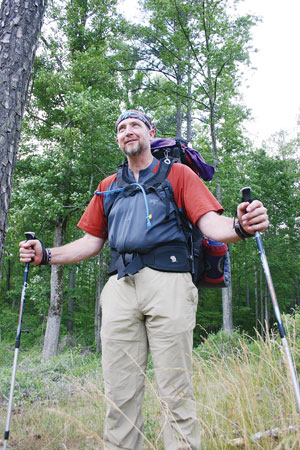 Donnie Sisk
“Are you one of those backpackers?”
“I am.”
“Why are you backpacking?”
“Let me sit down here and we’ll talk.”
Sisk, pastor to students and recreation at First Baptist Church in Pelham, Ala., starts to tell the boy about the big picture, the real reason he’s hiking the Pinhoti Trail.
Living Waters Fellowship in Oak Grove, Ky., needs a new church building, so Sisk hiked 100 miles earlier this summer to raise money for building supplies.
“Hey, Grandma!” the boy yells. “This guy’s a youth pastor, and he’s hiking to build a church!”
Sisk smiles but adds quickly, “This isn’t about me, or my church, or even Oak Grove. This is about the kingdom work that can keep growing there if they can build a building.”
The median age in Oak Grove is 32, as the majority of the residents are stationed at the nearby Fort Campbell, Ky., military base, Sisk explained.
“There are only about 10,000 people in Oak Grove, but since they are military and will scatter from there to places all over, if the church there can touch those folks, they can touch the world,” he said.
Two years ago, Sisk and a team from First Baptist Pelham went to help the 35-member Living Waters Fellowship build, but when they arrived, the church wasn’t ready and had no funds for building materials, Sisk recounted.
The answer to prayer for materials for the Oak Grove church was a five-day hike across Alabama’s two highest mountains, according to Mike Shaw, pastor of First Baptist Pelham.
“Donnie prayed and felt that the Lord was leading him to do a 100-mile hike for missions,” Shaw said. “Donnie is praying for missions while he walks and … doing this for the glory of God, putting feet to his prayers.”
Sisk, an avid outdoorsman, had previously done a 100-mile bike ride for missions work in Honduras, but he had only hiked “one 20-mile day in my life.” By the halfway point of the hike, the $10,000 goal for materials had nearly been met.