
Von Reynolds and his wife know what it’s like to be in need of down time when caring for a mentally disabled child. The demands are high, and there is no taking a vacation from parenthood.
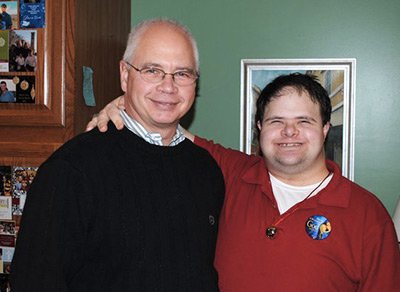 Von Reynolds and son Andy.
“Fortunately for us, we do have people who offer their services from time to time,” he said.
Reynolds, who is the pastor of Seneca Baptist Church, will speak on the topic of respite care on Feb. 17 for the South Carolina Respite Coalition (see related story).
His 27-year-old son Andy has Down syndrome, so he and his wife depend on friends to provide respite care for them from time to time.
“He goes to Tribble Center every day. That gives my wife a break,” Reynolds said. “There are times when we need to get out, and that respite is really nice.”
As a pastor, Reynolds has always found a helping hand when he needed it, like the time Andy had a feeding tube for six weeks and someone had to stay by his side 24 hours a day. With two other young children at the time, church members came through with meals, transportation and sitting with Andy.
Reynolds said his family found itself in a similar crisis situation last year when Andy was in the hospital for two weeks with pneumonia and his wife was very sick as well.
“The church members volunteered to sit with Andy at the hospital while I worked,” he said. “Some even volunteered to sit with Andy at night so I could get a much-needed night’s sleep. They also provided meals, cards, visits and prayers.”
Reynolds said Seneca Baptist has a strong support system for the mentally disabled and their caretakers. He said those who attend the Tribble Center are often invited to special events at the church, such as Thanksgiving meals and Vacation Bible school. The church also has a dedicated class and a bell choir for special-needs church members.
But not everyone is as lucky as he is to have such a strong support network, Reynolds said.
“Some do not have any family to help them. Some are too proud to ask for help,” he said. “Some do not have the contact with others that makes their needs visible to the church and community.”
With 3 percent of the population being mentally handicapped and more suffering from dementia and other debilitating illnesses that can tie a family to home, many people are finding they need respite care in order to work or to just take a break from the 24/7 task of caring for another person, he said.
“The needs are just increasing,” Reynolds said. “That’s a lot of people. A lot of time the church doesn’t recognize this.”
He said state and federal funds for respite care were cut in 2010, which has put a lot of people in a bind who depend on it so they can work or just get an occasional break to shop and run errands.
“The governor-elect has called on the churches to step up to the plate,” Reynolds said. “With our economy, there have been cuts. This is an area where [churches] can meet the needs.”
He said usually the best option is to keep special-needs individuals in the home rather than institutionalize them, but without respite care, caregivers are in danger of suffering burnout.
Reynolds said the upcoming conference is geared toward caregivers, faith communities, social workers, counselors and other professionals who care about the needs of caregivers. He said his goal is to make churches aware of the needs and to give them a tool to help. “There are just so many ways that they can minister,” he said. “Maybe I can awaken the church to this ministry, as there is a need out there.”