
Yearlong activities celebrating Anderson University’s centennial will reach a crescendo Feb. 9 during the annual Founders Day convocation on campus at 10 a.m. in Henderson Auditorium in the Rainey Fine Arts Center.
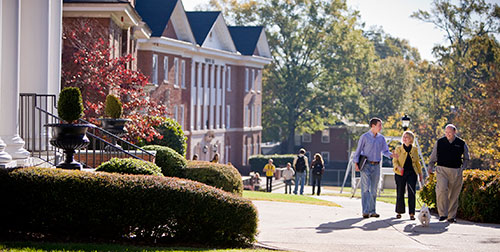
The university’s 100th birthday will be marked with music, special presentations and well-wishes from business and community leaders from Anderson, including mayor Terrence Roberts, James Thomason, pastor of First Baptist Church of Anderson, and Ed Carney, pastor of Riverland Hills Baptist Church and a member of the Executive Board of the South Carolina Baptist Convention.
Descendants of founders and key historical figures in the life of the university will also be present, including John Hopkins, the great-grandson of one of the first donors who secured money to establish the school a century ago.
The convocation will also feature the presentation of a new pictorial history of Anderson University, published by Arcadia Publishing and compiled by faculty member Joyce Wood, AU’s historian.
Anderson University was chartered by the State of South Carolina on Feb. 14, 1911, when citizens of Anderson, including leaders from the Chamber of Commerce, First Baptist Church of Anderson, and Saluda Baptist Association worked together to establish a Christian college in Anderson.
Over the past century, AU has been a four-year college for women, a co-educational college, the state’s first junior college and, today, a highly ranked university offering graduate programs and undergraduate programs for more than 2,500 students.
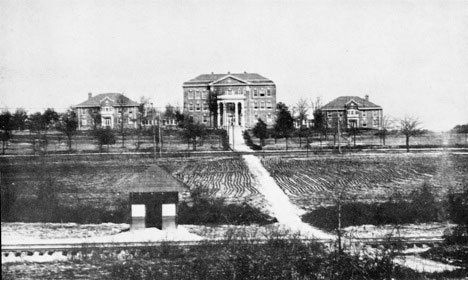 Nearly 100 years ago, all that comprised Anderson University were three buildings: two residence halls, and the administration building that housed everything else. All three are still in use today.
The spirit of Anderson University can be traced back to 1848, when Baptist pioneer William B. Johnson, the first president of the Southern Baptist Convention, opened Johnson University in the city of Anderson. The women’s school was a training ground for teachers in those days and grew to more than 600 students, but was forced to close during the Civil War and never reopened. For 40 years, local leaders missed the cultural benefits of having an institution of higher learning until they began to formulate a plan to create a new one. They secured 32 acres of land and $100,000 dollars as they put their plan in motion. They were convinced that the new college should be a Christian one, and solicited various denominations for sponsorship before presenting their assets to the South Carolina Baptist Convention in 1910. In a symbolic way, Johnson University was “resurrected” as Anderson College.
Current president Evans Whitaker came to Anderson College in 2002 and helped formulate a strategic plan to strengthen the school and raise its profile among private universities in South Carolina. The institution officially became Anderson University in 2006, organizing into a group of colleges and adding graduate programs.
In the past five years, Anderson has increased its campus acreage from 68 to 271, completed the largest single building project in school history, the $8 million Thrift Library, added three new residence halls, and has grown enrollment from just over 1,600 to more than 2,500.
As it has grown, Anderson University has reaffirmed and strengthened its commitment to academic excellence, while honoring and deepening its identity as a Christian and Baptist institution. The campus boasts more organizations promoting spiritual growth and service and sends more students on international and home mission trips than ever before.
Following the convocation, copies of the history will be available for purchase through area bookstores, the Anderson University Alumni Office, the Anderson University bookstore, and online at www.aubookstore.net. – AU