
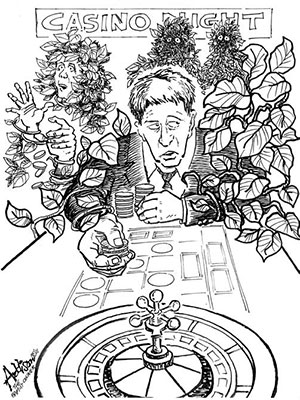
Some people seem to like kudzu. There is a societal kudzu that catches root and grows to cover and choke out the better conscience of a once-noble people.
With our legislature back in session, the kudzu planters are back with their little sprouts of gambling in its multitudinous forms. The innocent-looking sprouts grow and eventually attract the “big boys” of the gambling industry – Harrah’s Casino and the like – and those boys know how to grow some sprouts into big-time gambling.
 Dye
DyeThe latest seedling legislation has its salesmen in our Senate extolling the merits of charity-based gambling. As one senator said from the floor of the state Senate, “This is for all the good deeds in South Carolina.” The current legislation, S255, is being sold as a means of helping South Carolina’s 43,000-plus non-profit institutions raise money for doing their good deeds with “casino nights.” This would open the door to an awful lot of gambling within the confines of this one piece of legislation. This activity, all by itself, will have the attention of the big boys of the gambling industry.
Are we to appeal to people’s vices to compel them to do some kind of good in society? Can doing good no longer make its appeal simply by presenting a worthy need and asking others to get involved? We are tainting our supposed good intentions by appealing to the base nature of greed and its manipulative tool – gambling.
Just because a casino night benefits a non-profit organization, it doesn’t prevent the negative effects of gambling from ripping lives apart. Gambling of any kind is a source of strain on the broken-down institution of the family. Consider: The average rate of divorce for problem gamblers is almost 200 percent that of non-gamblers. In a 1999 study, the National Research Council reported that 17 percent of children of compulsive gamblers had been abused. The study also indicated that between 25-50 percent of spouses of pathological gamblers have been abused. The suicide rate for pathological gamblers is 2,000 percent higher than for non-gamblers, and 20 percent of all pathological gamblers attempt suicide at some point. Clearly, gambling takes its toll on the family in undeniable ways.
This problem legislation promises no cash payouts, which is the same promise video poker made. Under the proposed legislation, however, a gambler would be able to leave with his poker chips and go next door to a “different” business that would “buy” the chips – for cash.
Our legislators need to reject the constant peddling of gambling and protect our weakest members of society. If they fail to do so, gambling and its damaging effects will thrive like kudzu along a country drive.
– Dye is pastor of Macedonia Baptist Church, Columbia.