
Hearing passionate pleas to view the people of the world as God sees them, attendees of the 2011 Southern Baptist Pastors’ Conference were challenged to take action.
Following the conference’s theme of “Aspire: Yearning to join God’s Kingdom Activity,” speakers said now is the time to reach the nations with the gospel of Christ and not keep the Good News to themselves.
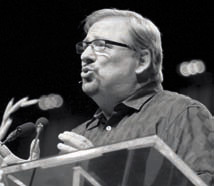 Warren
Rick Warren, lead pastor of Saddleback Church in Lake Forest, Calif., had the final say with a plea for church planting and a challenge to reach the world’s 3,800 remaining unengaged people groups with the gospel in the next decade. Warren called for pastors to either plant a church or have their church be a parent church for a new church plant in America and one among an unreached people group.
“For the Southern Baptist Convention to turn around, we’re going to have to change the way we keep score,” Warren said. “For the last 30 years, we have rewarded attendance. If you have big attendance, you get invited to speak. Friends, I have more respect for a church of 100 that’s planting churches than a church of 1,000 that hasn’t planted any. What we need to reward is not attendance but reproduction … not size, but sending capacity.”
Warren said it takes all kinds of churches to reach all kinds of people, and all kinds of people to plant all kinds of churches. The defining mark of a mature church, he said, is whether it reproduces.
“All of the doomsday predictions of the SBC would turn around if everybody would start having babies,” Warren told Baptist Press in an interview. “God blesses the unselfish church that thinks about more than its own church.”
During his Pastors’ Conference message, Warren described the PEACE Plan, an outreach strategy based on Jesus’ ministry that nearly 15,000 Saddleback members have implemented to plant churches in all 195 nations around the world. PEACE stands for: Plant churches, Equip leaders, Assist the poor, Care for the sick, and Educate the next generation.
Saddleback, which has planted churches every year since its inception in 1980, has committed to provide training and will be launching a church-planting academy this fall. The academy will take 100 church planting interns, provide housing and training for one year, and then send the interns back to their home churches to be sent out as church planters in the United States and around the world. Saddleback also will provide curriculum for churches that want to become church planting academies.
IMB president Tom Elliff shared the vision for the 3,800 unengaged people groups when he was elected to lead the IMB in May. Warren’s plea comes alongside this vision.
Warren, in speaking with Baptist Press, said he wanted to demonstrate a “DNA of unselfishness” and pass along to other churches what Saddleback has learned.
“A great commitment to the Great Commandment and the Great Commission will grow a great church,” Warren said. “I’m just assuming responsibility to say, ‘I don’t want to go another decade [without reaching every people group].’?”
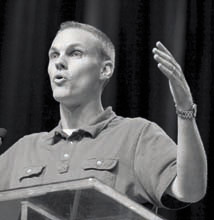 Platt
PlattDavid Platt, pastor of The Church at Brook Hills in Birmingham, Ala., who also preached the convention sermon, issued a passionate plea for the pastors to seize the moment and seek to radically reach the nations with the gospel.
Platt mentioned a trip he took to Egypt recently, encouraging and strengthening pastors there. Throughout the Muslim world, revolutions like the one in Egypt are springing up, filling Christians with the hope of greater freedom and opportunity to openly preach the gospel.
“In all these different countries, there are opportunities in the midst of it for the spread of the gospel, and that’s really been what this conference in Phoenix, Ariz., has been all about,” Platt said.
Not only did pastors and other believers at the Pastors’ Conference hear passionate pleas to be active in taking the gospel to the nations, but they also had the chance to give to make that happen in two key ways.
Pastors’ Conference leaders hope to raise $100,000 to engage an unreached people group in the Arabian Peninsula with the gospel through a translation project and humanitarian relief. The second objective for the Pastors’ Conference offering will be to fund similar pastors’ conferences in Africa, India and Asia.
Sponsoring similar conferences around the world, Platt said, will ensure that the 2011 Pastors’ Conference is “not just for our benefit, but for the good of other brothers serving in the pastorate all over the world.”
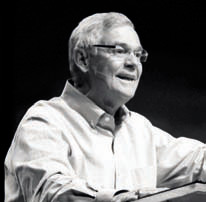 Whitten
Ken Whitten, pastor of Idlewild Baptist Church in Tampa, Fla., encouraged Pastors’ Conference attendees to look beyond the outward appearance of people and seek what God sees – the internal need for salvation in him.
“What you see is what you’ll be,” Whitten said. “What you know is where you go. Your care will be your prayer, and your hands will always follow your heart. So, what do you see? Before we can begin to see outside of ourselves, we need to see what the Lord sees.
“May we see not only the selfishness of our culture, and may we see the greatness of the calling of God, but may we [also] see the lostness in our cities,” he said. “Southern Baptists, let’s embrace the ends of earth to the end of the age.”
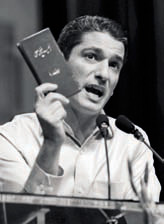 Ziafat
Afshin Ziafat, lead pastor of Providence Church in Frisco, Texas, told pastors that a “proper understanding of the gospel will be the greatest fuel for missions.” In contrast, he said, “When our appreciation and understanding of the gospel – the grace that we’ve received – wanes, then our heart for missions suffers.”
The Iranian-American pastor preached from Jonah 4, warning pastors to heed God’s words to the prophet and to see people as God sees them. Ziafat said the gospel reminds Christians that prior to Christ saving them, they were once enemies of God, spiritually blind and separated from God. This recognition, he said, should fuel compassion for those who do not know Christ.
“Do you understand that it’s by mercy and grace that you even know the truth of Jesus?” Ziafat asked.
Pastors must be radically God-centered for the sake of the gospel, for the sake of God’s name and for the sake of the nations, John Piper told pastors on Monday afternoon.
 Piper
PiperPiper, pastor for preaching at Bethlehem Baptist Church in Minneapolis, used the first petition from the Lord’s Prayer, “Hallowed be your name,” as the encouragement to pastors to be passionate about God’s glory. The hallowing and treasuring of God’s name, he said, is the ultimate purpose of all things.
“In eternity, we will not hallow the name of God so that anything happens,” Piper said. “We will not hallow God’s name as a means to anything. It’s the end. When you have arrived at millions upon millions of people hallowing the name of God, you’ve reached the end. They don’t do that for something. They do everything for that.”
Christians must experience a trinitarian revolution of the heart, Louie Giglio, lead pastor of Passion City Church in Atlanta, said.
“God is always at work, and he’s always wanting to do more than just the collective horsepower of some good people can do,” Giglio said. “He’s always going to show up in a way – to move in a way – that makes it clear to everyone that these people did not do this on their own. When that happens, glory comes to God in the church.
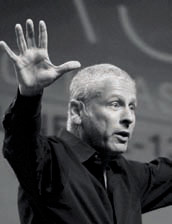 Giglio
“God always accomplishes his purposes through the person of Jesus Christ by the power of the Holy Spirit,” Giglio said. “Nobody can do what God has purposed for them to do unless they do it through Christ in the power of the Holy Spirit.”
Preaching on the account of Pentecost from Acts 2, Giglio explained what it looks like when the Holy Spirit evidences Himself in churches.
“When [the Holy Spirit] comes, there [will be no] more messages on the mission, because when the Spirit comes, people get going,” Giglio said.
Giglio challenged pastors to live for Christ in the power of the Holy Spirit and to lead their people to do the same. Then, he said, the world will know that what happens is truly from God and not from man.
Grant Ethridge, pastor of Liberty Baptist Church in Hampton, Va., was elected president of the Pastors’ Conference. – BP