
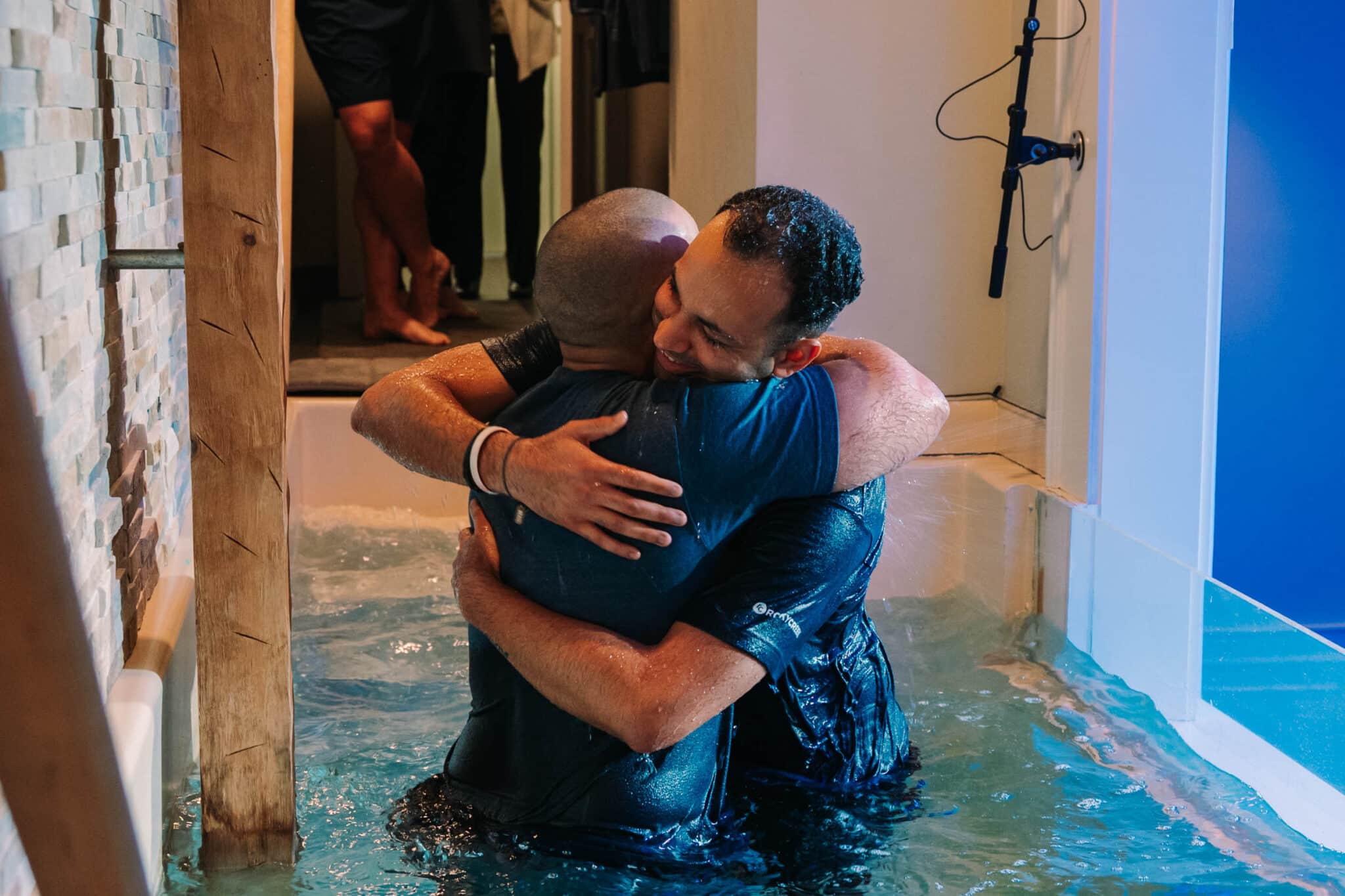

Geraldo Ortiz grew up in a loving home. He went to work. He paid his bills. He seemed to be an unlikely candidate for alcoholism. But emotions are either dealt with or numbed.
Ortiz lived in Puerto Rico until he was 10 years old and then his family moved to southern California.
“Going from Puerto Rico to California is a big cultural difference,” he said.
He spent roughly 10 years in southern California, and finished high school there before his family moved to northern California. As a kid, he fell in love with storytelling, so he went to college at Sacramento State and studied film. He said he liked expressing himself visually, more so than verbally because of his Hispanic accent.
His relationship to alcohol began when he was in his last year at Sacramento State. Ortiz was stressed about his final projects and exams, his dad had a stroke, and his relationship with a girl took a toll on him. He drank heavily to cool off.
After college, his life took a turn when he got behind the wheel intoxicated. He was charged with a DUI and spent the night in jail. Rather than waking him up to the dangers of alcohol, his feelings of failure caused him to turn back to the very drink that put him behind bars.
Ortiz said, “I never was able to cope with it, because I went throughout my whole life just kind of doing things correctly. I had a good job. Just freshly graduated college.”
He said before his DUI, he drank once a week, but after, he drank once a day.
Following the COVID-19 pandemic, his family moved from California to Texas. His longtime girlfriend joined them. And he got his own apartment. He recalled his dad always saying, “My house, my rules.” So, when he got his own place, he said, “My apartment, my rules.”
His freedom intensified his addictions.
He said, “That enabled me to just keep drinking more and more and more and more.” He hated it but couldn’t stop.
Still, he was a functional alcoholic who worked at a pharmaceutical manufacturing company. Physically he lost weight, and his skin began to dry out, but “unless you know what to look for,” he said you wouldn’t have guessed that he was an alcoholic.
But his girlfriend knew and she was on her last straw. Ortiz regretfully recalled the way he treated her and how he took advantage of all the chances she gave him to change. She eventually left.
When she left, it brought his pain to the surface and led him to drink more. His parents moved again, for his dad’s engineering job — this time to South Carolina. Ortiz decided to follow them there and move back in with his parents, and it was unlike any place he’d ever lived.
“The problem was that when I get to South Carolina, I end up in Florence. I don’t know if you’ve visited Florence, but it’s a whole 180 from what I’m used to. It’s deserted,” he said.
But it was in that deserted place where he’d get connected to a source of freedom. But not until he hit rock bottom. After a conversation with his dad that angered him, he found rubbing alcohol, diluted it with orange juice and began to drink. Immediately he felt a horrible burning in his throat. His dad had a feeling to check on his son at home and found him passed out. Soon Ortiz was strapped to a hospital bed in a medically induced coma. The doctors told Ortiz’ parents that he likely wouldn’t wake up, and if he did then he’d be in a vegetable state the rest of his life.
Recalling that day, Ortiz said, “On top of that, it was my dad’s birthday, so that was like my birthday gift to him: ‘Your son might just die.’”
But Ortiz woke up, and the first man he saw was his dad. Ortiz couldn’t talk so he used his phone to message his dad. “What happened?” he asked. His father explained they had to put him into a medically induced coma. Doctors put patients in medically induced comas to prevent swelling and other adverse effects from extreme alcohol use, according to Sunshine Behavioral Science.
Eventually Ortiz was discharged, and on March 26, 2025, Ortiz walked into the doors of Miracle Hill Ministries to begin his journey of recovery with Overcomers. He had limited contact with his family, but he became part of a brotherhood of former homeless men, former prisoners, and other professionals that struggled with addiction. He said he wouldn’t have gotten so close to these men outside of the program.
“They’re a bunch, but [I] love them to death,” he said.
The program lasted for more than seven months, and he trained to join the ministry as he neared completion. Ortiz learned that addiction goes deeper than alcohol.
He said, “We have addictions, but addiction doesn’t necessarily have to be a chemical substance. It could also bleed over to sins that we carry.” He mentioned possible culprits like pride, ego, and control.
To anyone addicted, Ortiz said, “I would say, there’s hope. Don’t give up. And be willing to surrender and let that pride down.”
He said that a key component to addiction is pride. “But if you let that pride down and you surrender and seek help, then the Lord can start working on you,” said Ortiz.
One way He’s seen the Lord work is through community and accountability. In his lowest moments, he said he felt like no one understood him. So instead of handling his emotions, he numbed them. He said you must be honest with yourself about what you’re using to numb yourself.
“It could be alcohol, it could be drugs, it could be porn, it could be phones, it could be working out, it could be TV, it could be anything. But you have to be honest with yourself about that,” said Ortiz.
One message that humbled him was the gospel. Ortiz said he wouldn’t have believed someone if they told him last year that he’d be passionate for the gospel.
“[I’ve] heard the gospel throughout my whole life, but I would say last year is the year when He called me by name. Once He calls you, you can’t run away no more.”
“So it’s been my comfort zone, it’s been my joy. It’s been my ground honestly. Like, He’s my center.”