
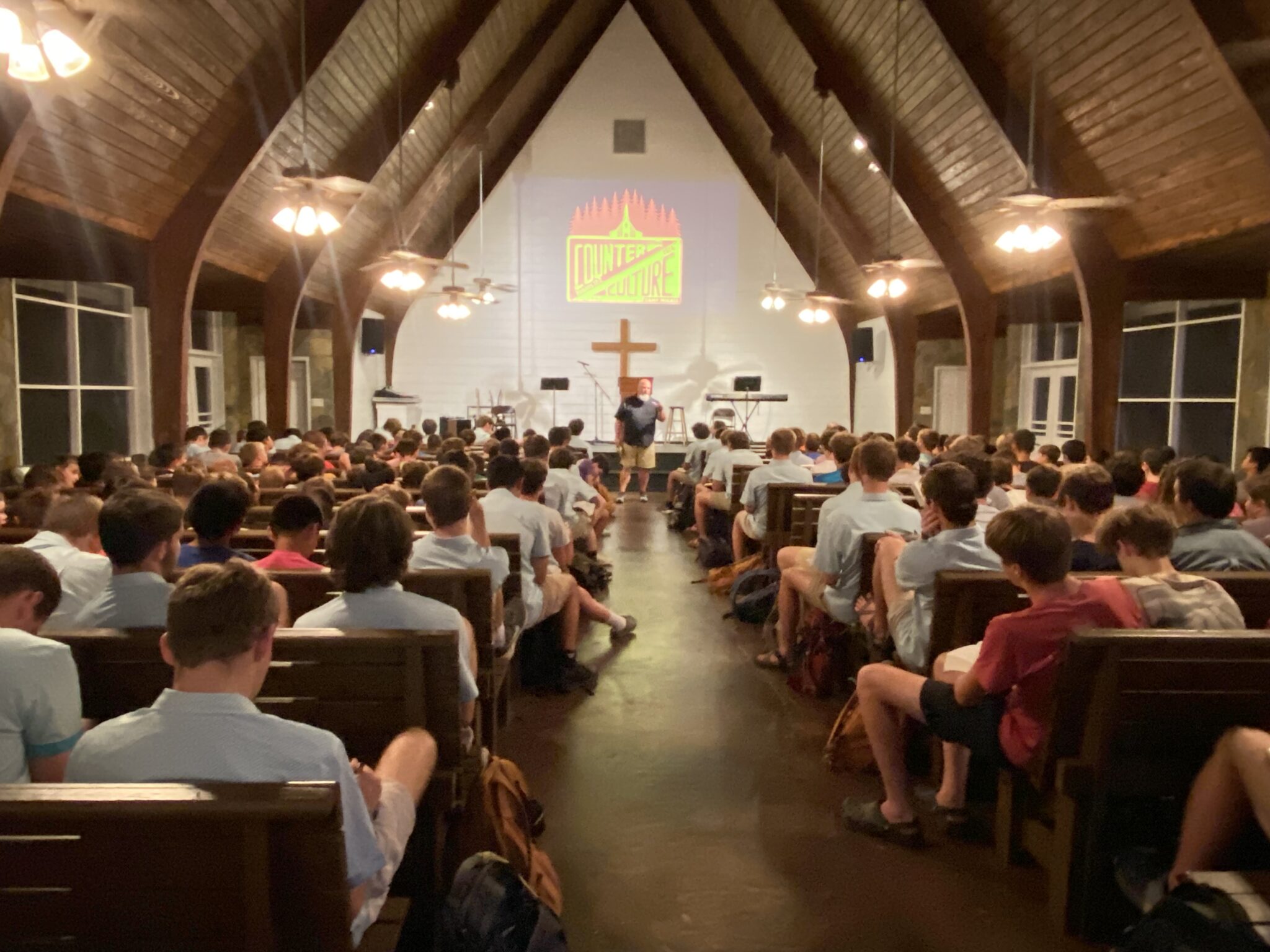
Are your kids getting old enough to be able to go to summer camp? As a parent, what factors should you think about when deciding about whether you should send your children to camp? What if you can’t afford it? We reached out to Phillip Jewell, who’s the associate director of Camp McCall, SCBaptists’ all-boys camp, to hear his thoughts.
What are a few good reasons why Christian parents should consider sending their kids/teens to a Christian camp (specifically a camp like Camp McCall)?
Reasons I send my kids to camp: to grow in their relationship with the Lord, to be mentored in their faith, to learn how to step out of their comfort zone, to discover their gifts and abilities, and to develop life-skills. [It’s] a time to renew and reset.
How would you encourage a parent who’s hesitant about sending their kid/teen to camp due to the financial cost/burden?
Yes, camps can be costly. However, many parents are already spending money on entertainment, childcare, and food for the week anyway. So, don’t hesitate. Let’s change our spending perspective and invest in student development. Check with your camp of choice. They may be like Camp McCall and offer camper scholarships.
Yes, it’s an investment, but there is nothing better than having other people pour into your child’s life. It’s amazing how children will hear the same things differently when it comes from someone outside their family, especially people they look up to and respect. It validates everything they’ve been taught their entire life.
Is there anything unique about the environment at camp that lends itself to spiritual growth and formation?
Camps work tirelessly to provide environments of opportunity for campers. Some locations limit technology distractions. Camp McCall is unique, as it is geographically situated in the mountains where many modern tech devices just don’t work. Camp McCall also creates a [unique] environment as it remains an all-boys camp. (Note: Camp La Vida is SCBaptists’ all-girls camp.)
There’s something about being surrounded by God’s beauty — [with] no distractions and no screens — that causes us to have real-life connections. We connect with staff, other campers, and, most importantly, with God. The Lord speaks during quiet time, songs, Scripture, dialogue with the staff, talks as we hike along the trail, adventure/recreation initiatives as we debrief the activity, during missions [talks], cabin talks, and chapel.
What kind of relationships are often formed at Camp McCall?
Genuine. The disconnect allows for true connection — relationships with friends, fellow cabin mates, and relationships with college-age staff who have a passion for mentoring, sharing about Christ, and experiencing the outdoors.
What kind of lasting impact have you seen in campers/counselors who have attended or served at Camp McCall?
We see generational relationships. Campers come back year after from first graders to seniors then back to work on staff — as well as former staff children, who come back as campers and staff: 67 years of legacy.
What’s the hardest part of camp for the kids/teens? In what ways might a camper struggle during camp?
Sometimes it is [hard] just being away from technology and other comforts of home. For others, it may be their first time away from home.
A lot of growing up, maturity, and independence comes with going to an overnight camp. These are all things that are very important for our young men. Our campers [learn] that adversity is something they can overcome and it is only temporary. They learn to rely on the Lord and be independent. Often it makes campers more appreciative of the little things that their family members do for them and how much they mean to them.
Sometimes it’s harder for the parents than for the campers to be away. It allows the parents time to refresh and to rekindle hobbies and passions of their own.
What’s the most rewarding part of camp for the kids/teens? What does the Camp McCall staff hope campers will walk away with?
The most rewarding part of camp is seeing life change. Many times these boys come to camp one way and they leave another. They become more dependent on the Lord and more independent in their capabilities. They learn that they can overcome fears like sleeping away from home or an insect sting or a high ropes climbing initiative, and they feel so proud of their accomplishments. They develop teamwork and friendships as well, as they realize their [own] value. They grow in their faith; they may learn to fall in love with God‘s Word, how to pray or how to hear the Lord’s still, small voice speaking to them.
We hope that they leave camp after experiencing adventure, adversity, and accountability with a stronger relationship with the Lord and memories that will last a lifetime.