
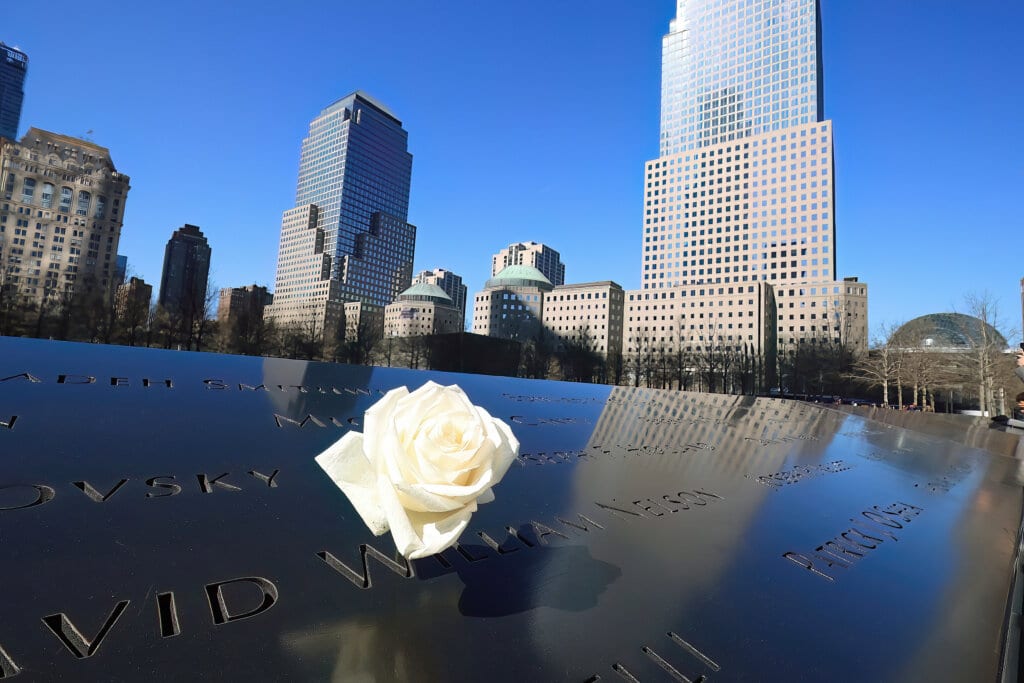
I can hardly believe 25 years have passed since our nation endured one of the worst manmade disasters in our history. The memory of Sept. 11, 2001, remains sharp, sacred and heavy. For those of us who ministered in the days and weeks that followed, grief and duty were inseparable. We carried the faces of the lost, the exhaustion of first responders, and the prayers of families into places of ruin — and we learned that faith, even in the darkest hours, still holds people together.

Don Biadog Jr.
At the time, I was a NAMB‑endorsed Navy chaplain serving under Coast Guard command at the United States Coast Guard Training Center in Petaluma, Calif. I received orders to assist victims and first responders in New York. One of the most important ministries my fellow chaplains and I performed was escorting families to the sacred site. I remember persuading a New York lieutenant to allow chaplains to accompany 50 grieving family members to Ground Zero. That moment required pastoral courage and the steady presence of civic leaders such as Mayor Rudy Giuliani, who ensured families would not be alone.
Ministry at Ground Zero was the most difficult season of more than 50 years of service. My fellow Navy chaplains ministered under Coast Guard command for more than a month — standing beside firefighters, police officers, military personnel and civic leaders. Each day was exhausting and each night spiritually demanding. We prayed with those who had no words left, stood with those whose strength was gone, and carried home the weight of what we had seen. Yet even amid the ashes, we felt a quiet assurance that God was present.
From Ground Zero to Building Zero
Three years later, I found myself again on devastated ground — this time in Baghdad during Operation Iraqi Freedom, serving in what we called Building Zero. The heat was relentless and the battle fierce. Ministry there was equally demanding and sacred. I lived with constant fear because daily bombings targeted our lodging and work areas. Three of my neighbors lost their lives, and a dozen were injured.
From Ground Zero to Building Zero, one truth has remained constant: We will never forget the men and women who perished on Sept. 11, 2001. Their memory calls us to live with courage, compassion, and a renewed commitment to building a better world.
How to keep the memory alive
• Honor the fallen. Speak their names, tell their stories and preserve their legacy through remembrance ceremonies and community gatherings.
• Share testimonies. Firsthand accounts of courage, sacrifice and service teach future generations the cost of freedom.
• Teach the lessons. Emphasize unity, vigilance, compassion and the importance of standing together in crisis.
• Serve in their memory. Turn acts of kindness and community service into living memorials.
• Pray for peace. Lift prayers for healing, reconciliation and protection for our nation and the world.
• Practice compassion. Small acts of mercy ripple outward and heal communities.
• Build understanding. Seek dialogue across cultures, faiths and backgrounds.
• Support first responders. Encourage, thank and pray for those who protect and serve.
• Cultivate hope. Speak hope boldly when the world feels fragile.
• Live with purpose. Let your life be a testimony of resilience, faith and service.
As we remember the fallen and serve those who remain, let our actions be the living testimony of resilience and compassion. In honoring their memory, we recommit ourselves to courage, to service and to building a world that reflects the dignity of every human life.
— Commander Manuel A. “Don” Biadog Jr., CHC, USN (Ret.) received the 2024 Presidential Lifetime Achievement Award and served as the Command Chaplain of MCAS Miramar (the former home of TOPGUN). He was selected as the Veterans of Foreign Wars of the United States National Chaplain of the Year in 2023, served as a mentor to Southern Baptist chaplains across America, and currently serves as the interim pastor of Sonlight Church in San Diego, Calif.