
(Editors’ note: This article was originally published at WORLD Opinions.)
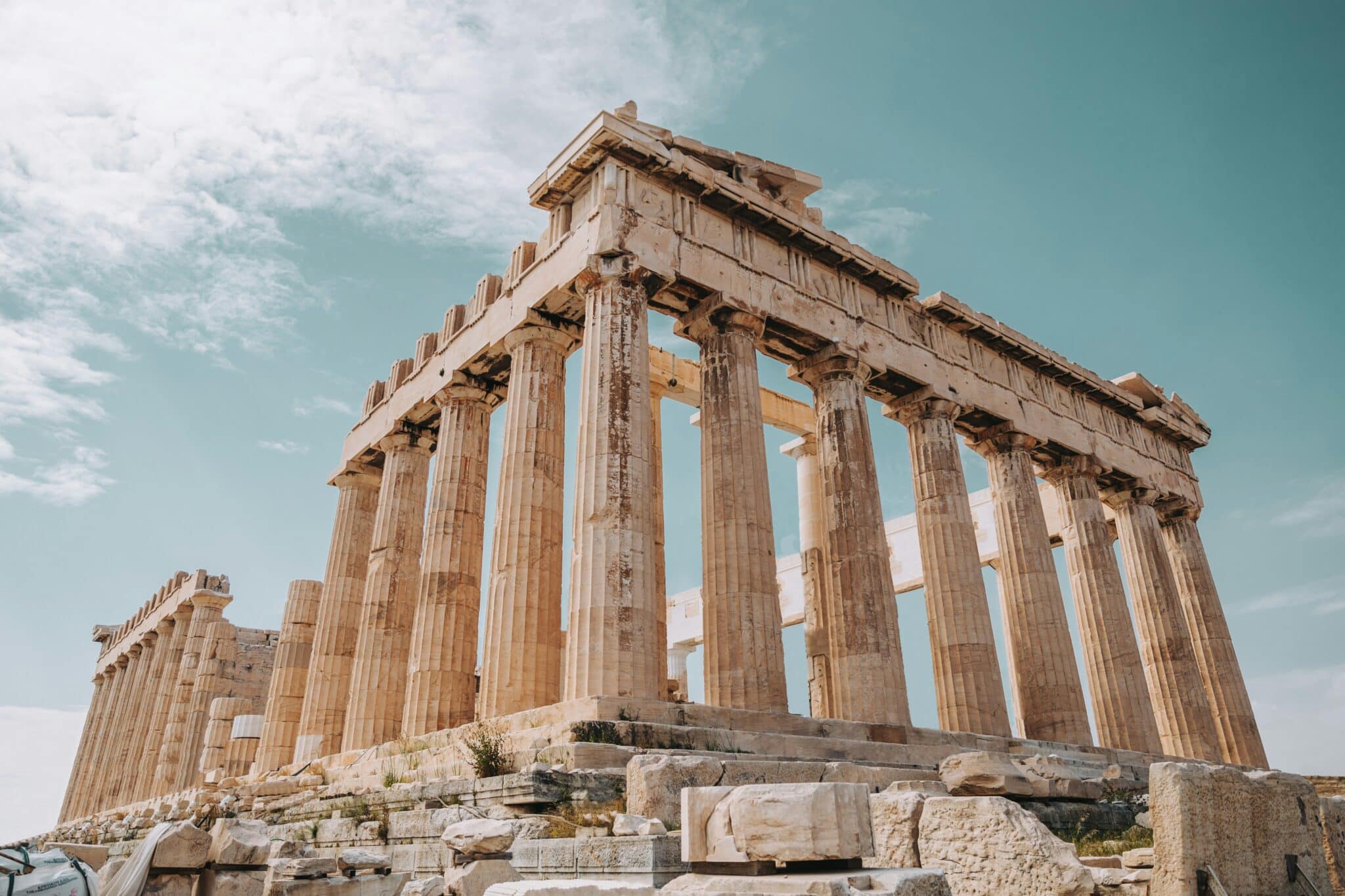
Last week, with a majestic view of the Acropolis of Athens behind him, the secretary of state of the United States of America delivered an address in which he declared the enduring achievements of Western civilization, set out a defense of the West, and warned of incalculable loss if that prized civilization were to be destroyed. As a speech, it was a tour de force. As a statement of American power, it was clear and candid. Secretary Rubio met the moment and spoke with remarkable candor. Western civilization now faces an existential crisis, and those who would defend the West had better seize the opportunity before it is too late.
Acknowledging the ruins of the Acropolis gleaming behind him, Secretary Rubio spoke about the inheritance that Greece has given the world: “For thousands of years, the civilization that built what stands behind me has captivated the imagination of the Western world. Generations of statesmen, artists, and philosophers have looked to it — they’ve looked to it with wonder, and they’ve looked to it with awe.”
He pointed out that the Parthenon has stood on the Acropolis for 25 centuries and that the inheritance of the ancients had been preserved and passed on by “the sons of Athens and Rome” — and that the civilization they established had produced what became known as Western civilization, or simply the West.
America, he explained, is “covered with the fingerprints of antiquity,” noting that the U.S. Constitution was born in Philadelphia, “itself a Greek name.”
Rubio’s argument from history was both urgent and classic. He traced the emergence of the West from the ancient roots of Athens and Rome and then turned to declare a civilizational crisis and call for Europe, where that civilization came to full flower, to seek to restore and recover Western civilization and rescue it from its enemies.
Rubio credited Athens and the classical Greeks with playing such a large part in the formation of the West. “This was the foundation of the Western mind,” he said, “our math, our science, our medicine. Our philosophy, ethics, and religion. It paved the way for the gospel of Jesus Christ to find fertile soil in Europe and flourish in the age of Christendom. It was the foundation of the riches of Christian theology — of Augustine and Aquinas and the whole tradition of natural law.”
I would add Jerusalem to Athens and Rome, but what this secretary of state said out loud was remarkable — right down to Augustine and Aquinas and natural law. No recent secretary of state has said anything like this, and he said it boldly. His face and his voice revealed that he knew exactly what he was doing.
What is at stake in this crisis far exceeds policies and platforms, though they are surely involved.
He was asserting the fact that Western civilization is now under sustained attack and deliberate subversion — and must be defended stalwartly. As he said, we now stand at a crossroads. He warned that “the next decade and the decisions we will make will write the story of the next century. The course we take will determine whether the West maintains its place at the head of the world or resigns itself to a future of atrophy and servitude and decline. We will either choose to act now or lose the choice to act at all.”
Secretary Rubio knows what we are up against. “Over time,” he said, “we in the West came to feel ashamed of the very things that made us exceptional. We felt embarrassed that our achievements set us apart from the rest of the world.” The West must regain its convictions and spirit, he warned, or it will fall into ruin.
Rubio had delivered a similar message earlier this year at the Munich Security Conference. In that address, he had warned of a looming crisis and accused many European leaders of responding with little more than proposals for “managed decline” and “civilizational erasure.” In this latest address, the secretary warned that the West stands at an “inflection point” that will lead either to disaster or to renewal.
For decades now, intellectual elites on both sides of the Atlantic have deliberately subverted the very concepts of the West and Western civilization, arguing that the idea of the West as a civilization was a relatively recent invention of oppressors in the Age of Empire. That claim is patently false, but it is still standard fare, not only among intellectuals and academics but within the precincts of the political and ideological left. They use the institutions produced by that very civilization in order to deny and defeat it. They know what they are doing, and they have been at it for decades now.
The West truly stands at a moment of decision. What is at stake in this crisis far exceeds policies and platforms, though they are surely involved. Will Western civilization endure? I certainly hope so. My ultimate hope is in no earthly civilization, but I make no apology for working so that the civilization my grandchildren will inherit is a continuation of the West and its Christian patrimony.
Secretary Rubio ended with a call for the citizens of the West to “rediscover the virtues, the courage, and the strength to confront the dangers we face in our time.” We can only hope the leaders and peoples of the West were listening.
— Albert Mohler is president of The Southern Baptist Theological Seminary and Boyce College and editor of WORLD Opinions. He is also the host of “The Briefing and Thinking in Public.” He is the author of several books, including The Gathering Storm: Secularism, Culture, and the Church. He is the seminary’s Centennial Professor of Christian Thought and a minister, having served as pastor and staff minister of several Southern Baptist churches.