
It was 1996 – Nov. 3, 1996, to be exact. That is how precisely Michael Zigarelli recalls the day his manner of thinking began to shift from a secular to a biblical worldview.
On that day, Zigarelli’s father-in-law, John Cummings, passed away unexpectedly from a heart attack. At the age of 60, Cummings was a professor of anatomy at Cornell University and was leading a research team that studied the similarities of an equine motor neuron disease to amyotrophic lateral sclerosis – or Lou Gehrig’s disease – to find a cure.
“The moment was tragic beyond words, and in the pain of the moment I reflected deeply on John’s professional life, juxtaposing it with the trajectory of my own,” said Zigarelli. “I was a mainstream management professor at the time. I looked at my likely contribution to this world in the shadow of John’s and then, somewhat uncharacteristically for me at the time, I sought God’s perspective on what I should do.
“I was a relatively nominal Christian in 1996, so when I received back from God that I should begin to research and teach the connections between the Christian faith, work and management, I was ambivalent, even worried. I could see that this sort of work would be far more contributory than what I was doing, but I also knew the difficulty in doing interdisciplinary research, especially with little formal training in theology,” he said.
Nonetheless, he tried to conform to God’s will. As expected, the work proved frustrating at times, as he tried hard to produce subject matter worthy of God’s work.
“Sometimes it took me a whole day to write five sentences about how some Christian principle applied to a workplace or business situation. It was awful. But in wrestling through that, God taught me many important things about the nexus of faith and business,” he said.
Also as expected, the work was personally trying at times, as he learned lessons about persevering through persecution when some of his colleagues at secular schools rejected him for pursuing “that superstitious, anti-intellectual stuff.”
“Through those refining fires, I gained more of an understanding of what it means to have a biblical worldview, as well as a little about the consequences of that worldview – the cost of discipleship and the enormous profit of it,” he said.
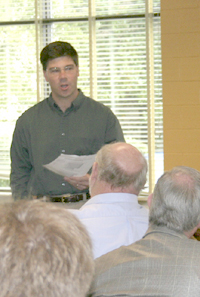
Michael Zigarelli is now associate professor of management at the Charleston Southern University School of Business. His previous academic positions include serving as dean of the Regent University School of Business and as associate professor of management at the Fairfield University School of Business.
He is the author of several books, including “The Minister’s MBA,” “Cultivating Christian Character,” “Ordinary People, Extraordinary Leaders,” “Faith at Work,” and “Management by Proverbs.”
Zigarelli attended several secular schools in pursuit of his academic degrees that include a B.A. in economics and history from Lafayette College, an M.A. in industrial and labor relations from Cornell University, and a Ph.D. in employee management from Rutgers University. Those experiences, in addition to the three Christian universities where he has been employed, have afforded him some valuable perspective about what contributes to student transformation. Overall, he’s noticed that undergraduate students are shaped and developed by similar forces at both categories of schools: peers, professors and curriculum.
“First and foremost, students are more significantly influenced by their peers than by anything else, I think. Despite their nonconformist pretenses, students – and we older adults alike, for that matter – are remarkably conformist when it comes to adopting the values of those around them. The way they dress, the way they speak, their sense of right and wrong, how hard they work and for what purposes, their view of God. In college, all of these things are more a function of student culture than of anything that goes on in the classroom.,” said Zigarelli.
Although the development drivers are similar at Christian and secular schools, Zigarelli has noticed that they often produce graduates with vastly different worldviews.
“At today’s secular school, it’s not uncommon for students to be graduated as relativists – or, at best, pluralists – no matter what they believed upon entry. At today’s Christian college, by contrast, the notion of absolute truth is at least given a fair hearing, and undergrads receive their diploma having been exposed to a biblical worldview,” Zigarelli explained.
One of his focuses is integrating faith in education, but rather than holding to specific standards or principles, he tries to just teach from who he is.
“The closer I grow to God, the more likely I am to talk about ‘God things’ wherever I am. That includes the classroom. When I managed faculty as a dean, I can tell you unequivocally that those faculty who did faith integration exceptionally well were those who had truly surrendered their lives to God and were in a close relationship with him. In the same way, those who did faith integration poorly or who resisted it were, without exception, people who were just going through the motions of their faith or were simply too busy for God,” he said. “Faith integration flows primarily from who we are, not from our curricular design.”
In order to fulfill his second focus, promoting biblical practices in business, Zigarelli emphasizes the principles of servanthood and stewardship.
Warning of imbalance, however, he explains that “if we, as managers, go too far in one direction, we get people who love us, but a lousy bottom line; if we go too far in the other direction, we get a decent bottom line, but nobody who sees Jesus in us. So balancing the virtues of servanthood and stewardship is my current framework.”
He is also careful to point out the underlying principle of all these standards, which is humility. He clarifies, saying, “There’s an antecedent, though; a foundation for both of these virtues. It’s humility. I believe the faithful business person is one who is humble enough to be led by God and humble enough to have compassion for people.”
Defining a Christian leader may be difficult. Explaining it may even be a paradox. But, in the end, the definition may be as simple and direct as the fact that a Christian leader emulates Christ. In defining who a Christian leader is and what he does, Zigarelli references Matthew 20:26-28: “It is not this way among you, but whoever wishes to become great among you shall be your servant, and whoever wishes to be first among you shall be your slave; just as the Son of Man did not come to be served, but to serve, and to give His life for a ransom for many.”
Zigarelli’s answer to the question of what makes a leader a Christian leader follows suit. “A leader is a person who has followers, and a Christian is a person who is a follower of Jesus. So a Christian leader, then, is one who excels at leadership by first being an authentic follower – a follower of the greatest leader of all time.”
Zigarelli recognizes that there is a lot of information out there about how to work for God in all we do and how to lead and manage God’s way. So, he’s compiled a lot of that information into a free, online resource center for living out one’s faith in the workplace. Through www.Christianity9to5.net, one can research the articles library, case studies, self-assessment tools, a personal development plan, and Christianity 9 to 5 Magazine.
“Workplace ministry is especially important because the workplace is where Christians have so many close relationships with nonbelievers and nominal believers. It’s a strategic position that our pastors simply don’t have, a personal ministry that each one of us can embrace as ambassadors of the faith. It’s my hope and prayer that many will be blessed by this website and that they’ll use it to teach and encourage those whom God has entrusted to them.”