
Where are you with Sunday school, and how does Sunday school fit into your church’s mission to make disciples?” Those are the questions that primarily drive the work of Belinda Jolley, director, adult ministry office, South Carolina Baptist Convention, as she serves South Carolina Baptist churches.
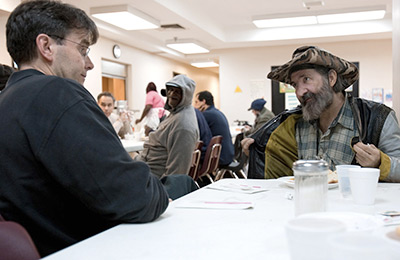 Sunday school is not a “one-hour event on Sunday morning,” says Belinda Jolley, but an opportunity to “become missionaries, moving out of class to impact – lost people.”
“My greatest fear is that we’ve allowed adult Sunday school to be a one-hour gathering on Sunday morning; and because of that, we might not love lost people,” she said. “Sunday school is a resource for how the church carries out its mission – it’s not a one-hour event on Sunday morning. It’s a part of the church’s overall discipleship process.”
In describing her passion, Jolley uses the word “missional,” but knows many see that word as a “temporary movement” that tends to thumb its nose at everything traditional.
“In talking about a missional approach to Sunday school, it’s not about stopping what we are doing, because we are doing a lot of great things through Sunday school,” she said. “but there is an urgency to get churches and classes talking about moving from that one hour to a process through which disciples are made and through which we reach the lost.”
Jolley isn’t alone. She has joined with 12 other adult education leaders from state conventions across the Southern Baptist Convention landscape to start a Sunday school blog website: SundaySchoolLeader.com. Leaders from Oklahoma to Michigan and throughout the deep South are writing about Sunday school approaches and missional Sunday school thinking.
Missional conversations aren’t just for churches using a traditional Sunday school model. The conversations apply to all small-group ministry whether it’s called Sunday school, small groups, home groups, or care groups. There’s even an application for men’s and women’s ministry and senior adult ministry.
“We know the church has a Great Commission mandate to make disciples, baptize people, and teach the Bible. How can Sunday school be a resource to the overall church’s process to make those disciples?”
She uses a process to help churches and Sunday school leaders understand.
Most Sunday school classes have members, who come to a class on Sunday morning to study and learn.
“It is very important for people to attend Sunday school, to learn biblical truth, and to grow as believers through Bible education,” she said. “But, beyond that, we want members to spiritually grow into ministers. Ministers love one another and meet the needs of one another. As much as we take attendance, we want to measure how many of our members are becoming ministers.”
But it doesn’t stop there, and that’s where Jolley says classes, Sunday school organizations, and churches take the next step.
“We want our ministers to become missionaries, moving out of class, to impact the community and to impact lost people,” she said. “We want class members to talk about where they went to minister in the community. It is important for class members to love one another as ministers before moving out to love others as missionaries. If we can’t love one another in class, we’ll never be able to move out into the community.”
The missional mindset, from member to minister to missionary, is an intentional mindset and has become Jolley’s primary focus when she’s called upon to lead Sunday school training in South Carolina. She likes to ask questions like these:
– Are you developing a relationship with someone who doesn’t know Jesus?
– How are you serving beyond your church?
– Do you talk about the application of your Bible study in a context beyond the church?
“I want churches to wrestle with being missional,” she said. “I want to see churches, through Sunday school, say, ‘We’ll do whatever it takes to help people find Jesus Christ and their place in ministry.’ When that happens, our hearts get to a different place, and we do things differently. And when our focus is on the outward, the inward always takes care of itself.”
In her own Sunday school class at First Baptist Church, Rock Hill, she shared an example of missional Sunday school: One member had a burden for homeless people and asked the class if it would be willing to prepare food at a homeless shelter. About 20 members went to support their friend from class, moving from being members to ministers to one another. Some may have gone because of the invitation from a friend and they enjoyed serving together as a community.
“Once individuals went to the shelter and put faces to the names of the homeless, they got a burden as a class for the homeless,” Jolley said. “Now it’s a regular project, a partnership, with the homeless shelter. Class members moved to the missionary level. A missional approach to Sunday school says, ‘We are going to minister expecting nothing in return – ministry can’t be limited only to those who will come to our church – we are just ministering to people in the name of Jesus.’ “
Tom Capps, missions mobilization consultant, Greer Association, who also serves on staff at Victor Church, Greer, said being missional moves a Sunday school class from periodic projects to partnerships within the community. Capps is also a state Sunday school consultant with the adult ministry office of the SCBC.
“As my dad was dying in a hospital ICU, I stood beside him and he said, ‘There’s something I need to tell you.’ There were a lot of things he could have told me – things a man needs to remember. But he said this, ‘Live your life for God and take care of your family.’ As he left this world, that was what my dad wanted me to do.”
“Jesus’ last words were not, ‘Go to church every day,’ ” Capps said. “Jesus said to go and make disciples, and we need that reminder of why we are in ministry in local churches. We are to make disciples.”
Capps said a church must embrace the idea, especially through Sunday school, that every believer is to be a disciple-maker and not only a church member. “Too many times, our new-member classes focus on making good church members and not how people can live lives that introduce others to Jesus.”
Capps said the missional approach means Sunday school teachers don’t just come to class and teach lessons.
“The teacher is there to shepherd a group of people,” he said. “That hour on Sunday morning is like the huddle on a football field. It’s a small part of the game, and the game is never won simply by having a huddle. The best Sunday school teachers are those who help connect the truth of God’s word to the real lives of people, and help people make application to the truth. Missional Sunday school is about going out into the community.”
Capps said missional Sunday school is about a class investing in partnerships that are ongoing – not just adopting a family at Christmas, but adopting a family for an entire year or longer.
Classes might develop partnerships with homeless shelters, as Jolley’s class did, or with faith organizations, multihousing complexes, crisis food banks, and schools.
“We think that we have to dream up projects,” Capps said. “In reality, God puts projects in front of us all the time. We just have to be focused on our mission, with our eyes open to see what God is calling us to do.”
“When the church gets busy beyond its walls and Sunday school classes can lead the way, people will notice the things we do as believers,” Capps said. “When they notice, we have the opportunity to show the gospel in action. Jesus fed people and then they listened to him.”
For more information, including a missional Sunday school chart (Connect3) from LifeWay Church Resources of the Southern Baptist Convention, visit http://www.scbaptist.org/link/article205406.htm. Belinda Jolley may be reached at 1-800-723-7242 or at belindajolley@scbaptist.org. – SCBC