
The years immediately following the Civil War were dark and difficult ones for South Carolina – and no less so for the churches of the still-young South Carolina Baptist Convention, founded only a few decades before, in 1821.
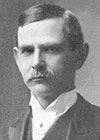 Lamar
Lamar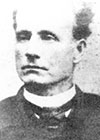 Morrall
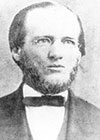 Pope
Pope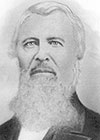 Dargan
State Baptist leaders struggled in the war’s wake – and its resulting devastation, poverty and ignorance – in an attempt to mobilize churches and associations around the cause of state and foreign missions.
But thanks to the efforts of four men – the first “general agents” of the state convention, who served during a 12-year period between 1866 and 1878 – South Carolina Baptists “kept their hands on the plow and produced a great harvest,” says SCBC historical archivist Jane Poster, who has written a series of articles about the leaders.
 Poster
“I became interested in these four men because it’s essentially a lost period of our history,” said Poster. “Richard Furman helped organize the convention, but these men had a heart for state missions and kept the work alive at a time when it could have easily been swept aside.
“They challenged people in our churches to see beyond the burned corn fields and destroyed homes and churches to see not only a state, but also a world that needed Christ.”
Poster’s collection of articles, one dedicated to each of the leaders, plus a prologue and epilogue by the author, can be read in its entirety at http://www.scbaptist.org/scbchistoryservices.
The stories highlight the accomplishments of J.O.B. Dargan (who served from 1866-1868), Thomas H. Pope (1868-1870), John. F. Morrall (1870-1871) and A.W. Lamar (1872-1878). In her narrative, Poster likens their work to that of a farmer – plowing, planting, cultivating and harvesting.
Plowing
When South Carolina Baptists employed J.O.B. Dargan, a Darlington/Hartsville-area pastor as first general agent (or “state evangelist”), questions were “many and troubling,” Poster writes. An excerpt from the minutes of the 1872 annual meeting of the state convention offers a candid appraisal:
“The ravages of war have left portions of our beloved state in a prostrate condition. Especially is this the case upon the sea coast – the whole range of coast country, from Georgetown to the Savannah River, present a picture of destitution truly deplorable – churches burned or deserted, a population demoralized or broken-spirited, and everywhere poverty under circumstances the most trying and discouraging.”
One of Dargan’s first tasks would be that of food distribution. Relief societies from other states sent almost 2,500 bushels of corn to feed citizens of South Carolina. Despite the harsh economic conditions, Dargan pressed South Carolina Baptists to adopt a “grace of giving” and a vision to bring all South Carolinians into a relationship with Jesus Christ.
Planting
Echoing Dargan’s call for sacrificial giving, Thomas H. Pope complained that state Baptists were spending more for tobacco than they were giving to promote the gospel. He suggested that each church member contribute one penny a week for the work of the convention, an effort that might raise $20,000 a year to send missionaries out across the state.
Pope traveled more than 3,000 miles and visited 60 churches, “challenging South Carolina Baptists to see beyond the needs of the local church and association,” Poster writes.
In his report to the state convention in 1869, Pope said, “If we fail to press forward with this work, it will not be from the lack of ability, but of willingness.”
Cultivating
During his relatively brief 18-month tenure, John F. Morrall preached or spoke about the mission imperative for South Carolina Baptists at least 326 times, traveling several thousand miles. His focus was in three areas: Sunday school, education and missions.
Morrall served during the state’s first Sunday school convention in Sumter. Convinced that “teaching young people biblical principles would produce a harvest in years to come,” Poster writes, “Morrall encouraged interest in general education and Furman University in particular.”
But he made missions his “specialty,” Poster writes. In his 1870 convention report, he said, “If our churches expect to prosper and grow spiritually, they must catch more of this spirit of Jesus, the missionary spirit.”
Harvesting
Of the first quartet of general agents to serve the South Carolina Baptist Convention, A.W. Lamar was both the longest-serving (at six years) and the youngest (elected at age 24). In 1873, the designation “corresponding secretary” was added to his job title.
Although Reconstruction would officially end with the elections of 1876, South Carolina’s economy would continue to rise and fall on the fortunes of agriculture. “Whether feast or famine,” writes Poster, “work continued, with thanksgiving for God’s goodness in blessing the ministry” of South Carolina Baptists.
Lamar recruited students from Southern Baptist Theological Seminary (which was founded in Greenville and operated from 1859-1877 before moving to Louisville) to work in “destitute” areas of the state during their summer breaks in exchange for tuition support from the associations they served.
Lamar also encouraged country churches to plant a “patch of cotton” for state missions, something he had heard was successful at raising missions support in other states.
Near the conclusion of his tenure, Lamar reported to South Carolina Baptists that 25 missionaries were serving across the state, “from the mountains to the seaboard.” The Executive Board praised his leadership as well as South Carolina Baptists’ faithfulness to missions, noting that “such gracious results should have been so rapidly brought about is a marvelous illustration of the oneness of our people and of the fact that God has given us, in this state, a host of godly men and women who esteem Christ and His cause dearer than all things else.”
In her epilogue, Poster notes that the 12 year-period during which the first general agents of the SCBC served were “some of the most difficult years South Carolinians had ever seen.”
“The Civil War left destruction and devastation, but their work reflected hope that is found in Jesus Christ,” Poster concludes. “They kept their hands on the plow and produced a great harvest of new believers, new churches, new work and renewed enthusiasm for the spread of the gospel around the world.”