
(Editors’ note: this article was originally published at WORLD)
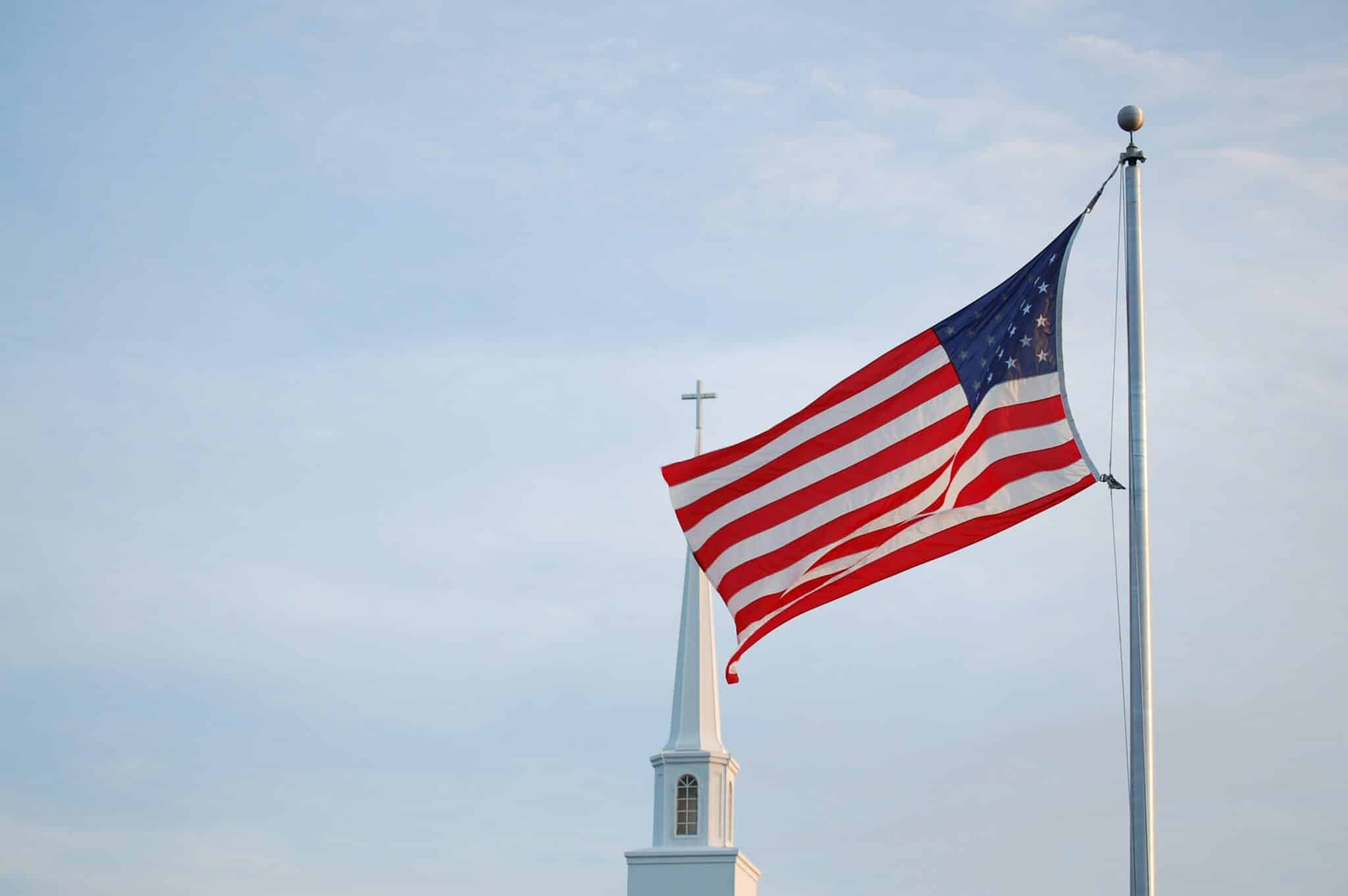
Is America a Christian nation? The answer depends upon your understanding of what it means to be a Christian nation. Are we constitutionally Christian with a legally established religion and a state church? Clearly not. Is Christianity central and essential to any honest account of American history? Certainly so. There is no honest way to deny the fundamental importance of Christianity to the American experience and our polity of ordered liberty. The entire culture was saturated with Christianity and Christian influence.
In the 1830s, the brilliant French intellectual and aristocrat Alexis de Tocqueville described religion as the first among the nation’s “political institutions.” From the beginning, Christianity played that central role — starting well before the revolution. By 1776, well over 90 percent of the population identified with some major branch of Protestantism. Even those often described as deists (and most were not classical deists) were specifically Christian deists, in the sense that some denied central Christian doctrines but still insisted on the cultural authority of Christian morality.
Historian Robert Middlekauff asserts that a specific sense of God’s providence was crucial to the American Revolution and the patriot cause. “Almost all Americans — from the Calvinists in New England searching Scripture for the will of God to the rationalists in Virginia studying the divine mechanics in nature — agreed that all things fell within the providential design,” he explained. He went on to argue the central role of divine providence in the American mind.
Middlekauff was not writing a theological treatise. His book, The Glorious Cause: The American Revolution, 1763–1789, published by Oxford University Press in 2005, just makes this point as central to our understanding of the times and the worldview of those early Americans. They had no explanation for the universe, for their own lives, for the passing of time, or for the meaning of human liberty and human dignity apart from the reality of God’s providence. This does not make them all believing Christians, but the contours of the biblical worldview were essential to the American project.
Steven D. Smith, a law professor at the University of San Diego, makes the same point emphatically clear in his recent book, The Godless Constitution and the Providential Republic. He asserts that the nation was born out of “providentialist premises and with a providentialist self-conception.”
Smith’s argument, carefully traced through American history, is that a modern secular liberalism had attempted to deny — and replace — that providential understanding. He points to one central issue: the moral authority that comes with a providential worldview but is subverted by secularism.
It comes down to whether or not morality has an ontological basis — a basis in objective reality. Christianity grounds ontology in the sovereign and glorious triune Creator, who created the world as the theater of His glory and infused all of creation with moral truth. Christianity is also founded upon the Bible and God’s gracious gift of special, scriptural revelation. For a long time, the vast majority of Americans — even those with an irregular personal faith — affirmed the same moral truths.
As Smith observes: “Here we have a fundamental difference between providential and modern secular liberalism: the first claims that liberalism needs — and has — a foundation in the basic ontology and history of the world, while the second foregoes and indeed eschews any such foundation.” By liberalism, he means the classic liberty enshrined in the Constitution. By modern secular liberalism, he means the attempt to make all claims of value stand unrestrained and without foundation.
“So, which interpretation is more viable?” he asks. “Is the transition from a foundational to an anti-foundational liberalism one of progress? Or of decline — even perhaps of collapse?”
I think the answer is clear enough already. If modern secular liberalism reigns supreme, civilizational collapse is inevitable. On the other hand, if Americans will reclaim and reassert the basic affirmations held by the founding generation and treasured for generations after them, there is hope.
Secularism offers no basis for genuine hope. It provides no cement to hold society together. It leaves every moral good untethered and vulnerable.
Is America a Christian nation? Understood rightly, at the very least this would require a recovery of the Christian consensus that existed in the founding generation. Can this Christian consensus be recovered? We must pray that it can … and will.
— Albert Mohler is president of The Southern Baptist Theological Seminary and Boyce College and editor of WORLD Opinions.